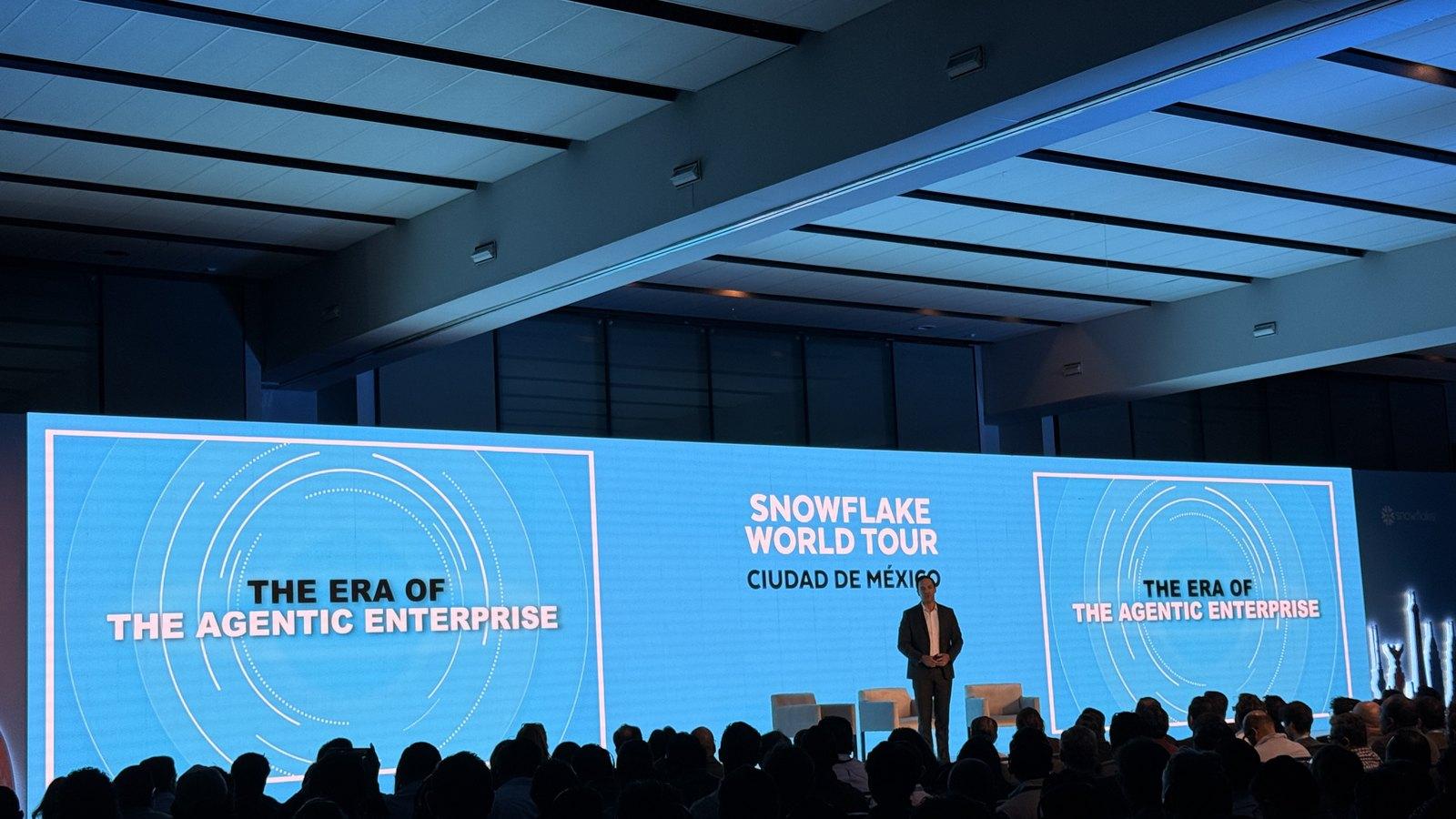
We spent October 13 at the Hilton Reforma, standing at a booth, from eight in the morning until the lights came up.
Snowflake's line for the day was "Making AI Real for Business". Ours was simpler: bring the things that already work, put them on a table, and let people try to break them.
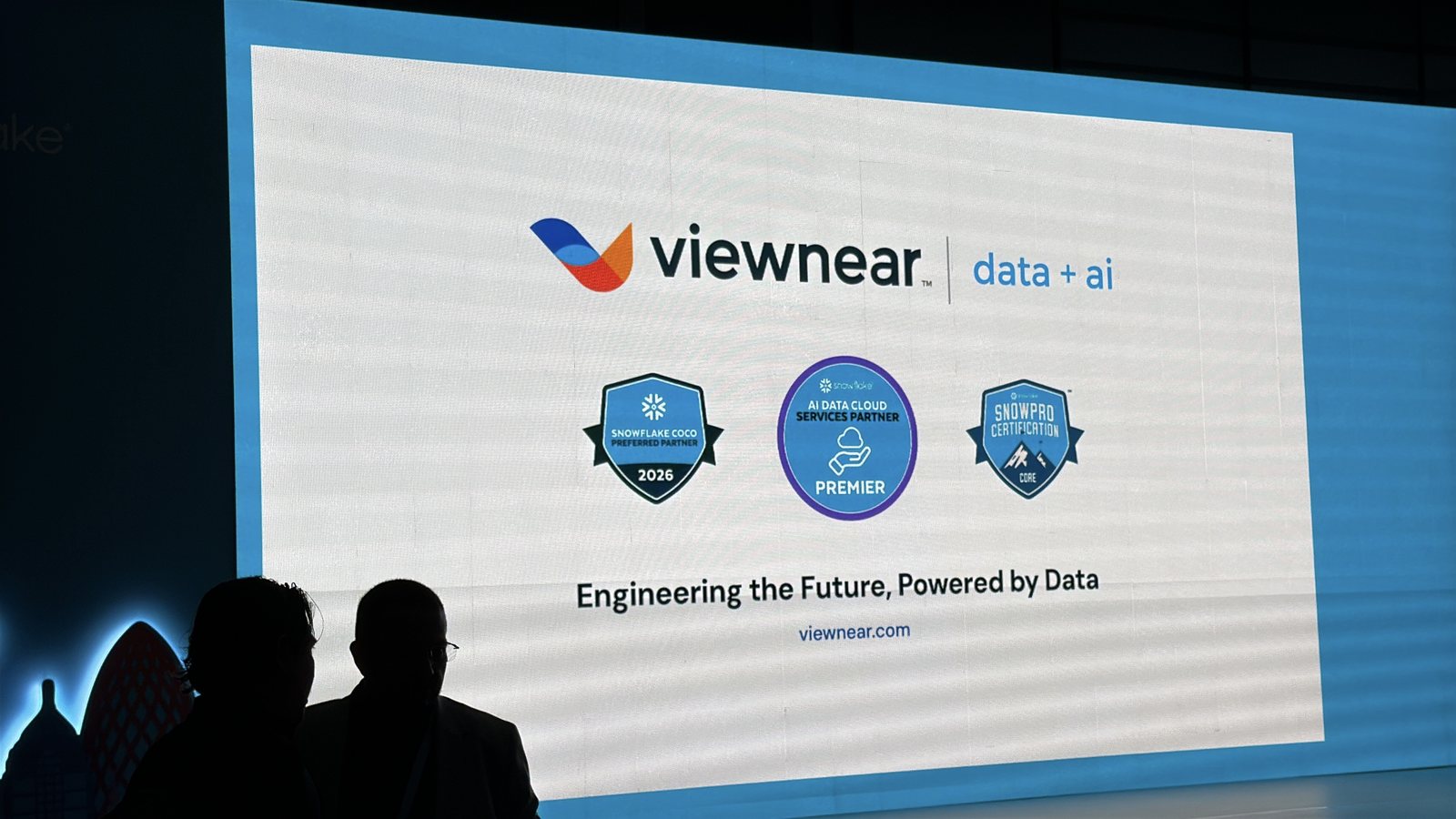
Somewhere in the middle of the afternoon our spot came up on the main screen, which is a strange thing to watch from the back of the room.
These are our notes from the floor.
What the day was about
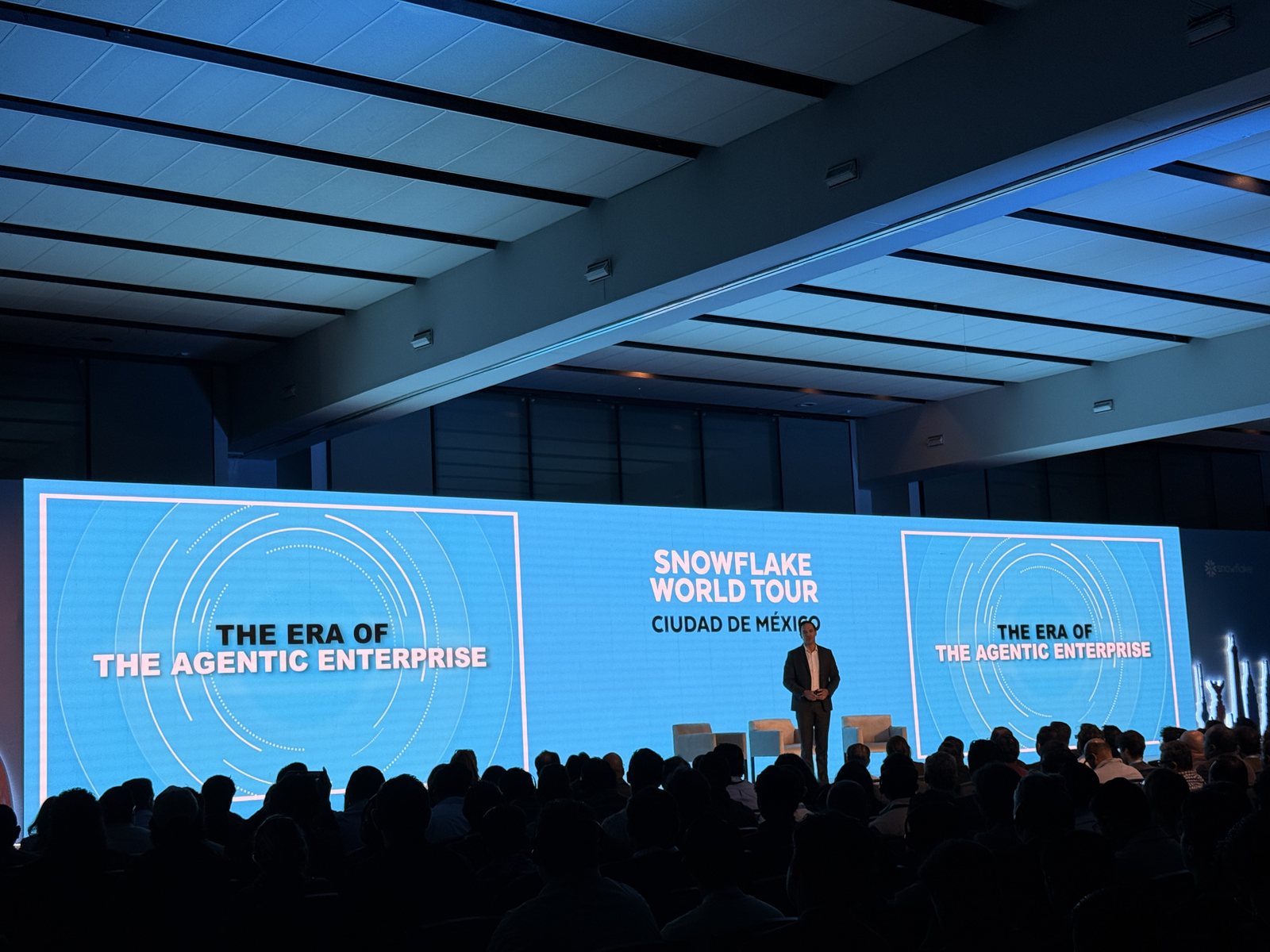
Snowflake called it the era of the agentic enterprise, and spent most of the keynote on what has to be true underneath before an agent goes anywhere near anything that matters.
One slide did the heavy lifting.
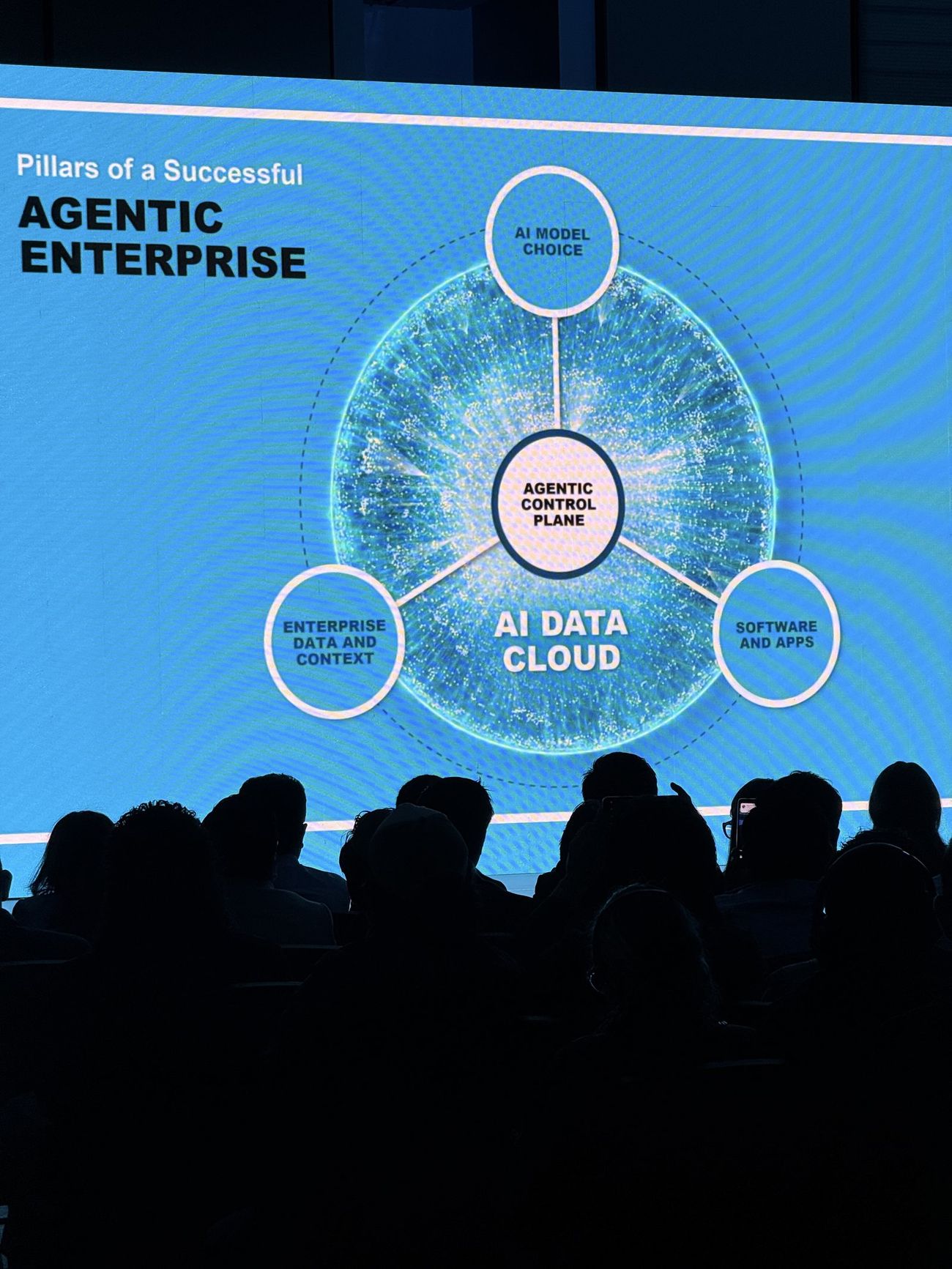
An agentic control plane sits in the middle of the AI Data Cloud, with three pillars around it: AI model choice, enterprise data and context, and software and apps.
We liked it for what it leaves out. There is no agent anywhere on that slide. The thing in the middle is a control plane, and the pillar holding up the side nearest the actual work is enterprise data and context, which is the unglamorous way of saying governed data, business definitions and permissions that already mean something. Put an agent on data nobody trusts and all you have automated is an argument.
If that sounds familiar, we wrote it down in June, in Snowflake is now the control plane for the agentic enterprise, four months before it was the theme of a keynote.
The booth
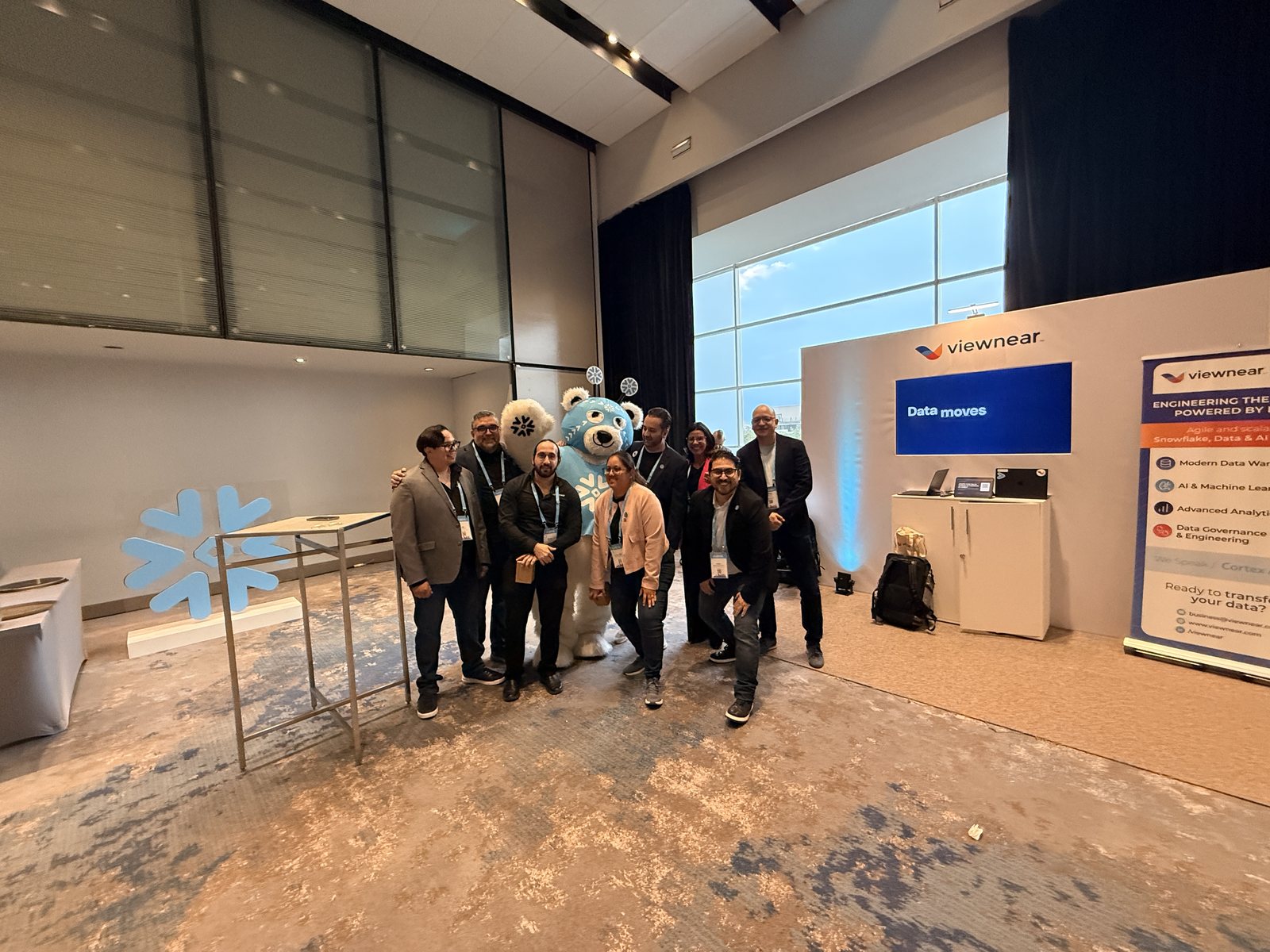
No slides. We brought the five accelerators that already run in production and asked people to hand us something real.
They did. Statements, invoices, contracts, loan files. The kind of paperwork that sits in a shared drive and takes someone most of a day.
| Accelerator | What it reads | What it leaves behind |
|---|---|---|
| DocLens | Mixed document packets | Validated business records |
| StatementIQ | Bank statements | Reconciled balances, income and traceable summaries |
| UnderwriteIQ | Loan files | Review-ready underwriting recommendations |
| InvoiceMatch | Invoices and payments | Duplicate charges, price gaps and unmatched payments |
| ContractLens | Contracts | Obligations, terms and renewals checked against records |
The pitch took about a minute. This reads your documents, it writes validated records into Snowflake, and it leaves a trail showing where every number came from. Then we would run it and let the output do the rest.
The question we kept answering
Almost nobody asked which model we use.
What they asked, over and over in slightly different words, was where to start. Someone would describe a process that has been wearing their team down, usually documents plus a spreadsheet plus a person who has been doing it by hand for three years, and then ask whether that was too small to count as an AI project, or whether a two year foundation program had to come first.
By the afternoon we had an answer down to three sentences, so here it is in writing.
Start where it hurts and where somebody can already put a number on it, whether that is hours a week, an error rate, or days added to the close. If nobody can measure the pain, nobody will be able to prove the fix, and the project dies at the next budget review. Pick the one whose data you can actually reach this quarter rather than the one that needs four systems nobody has ever joined, and when it is finished, keep the governed tables and definitions it required, because that is your foundation, built in the course of doing something useful instead of ahead of it.
The other question, nearly as common, was about proof. Not "do you trust the model" but "can I show this to an auditor". Who approved it, what did it read, can a number in a report be traced back to the page it came from. That is the reason the data goes into Snowflake first and the clever part comes second. There is more on how that gets built in data and AI, agents in production, and the case studies show it finished.
The people part
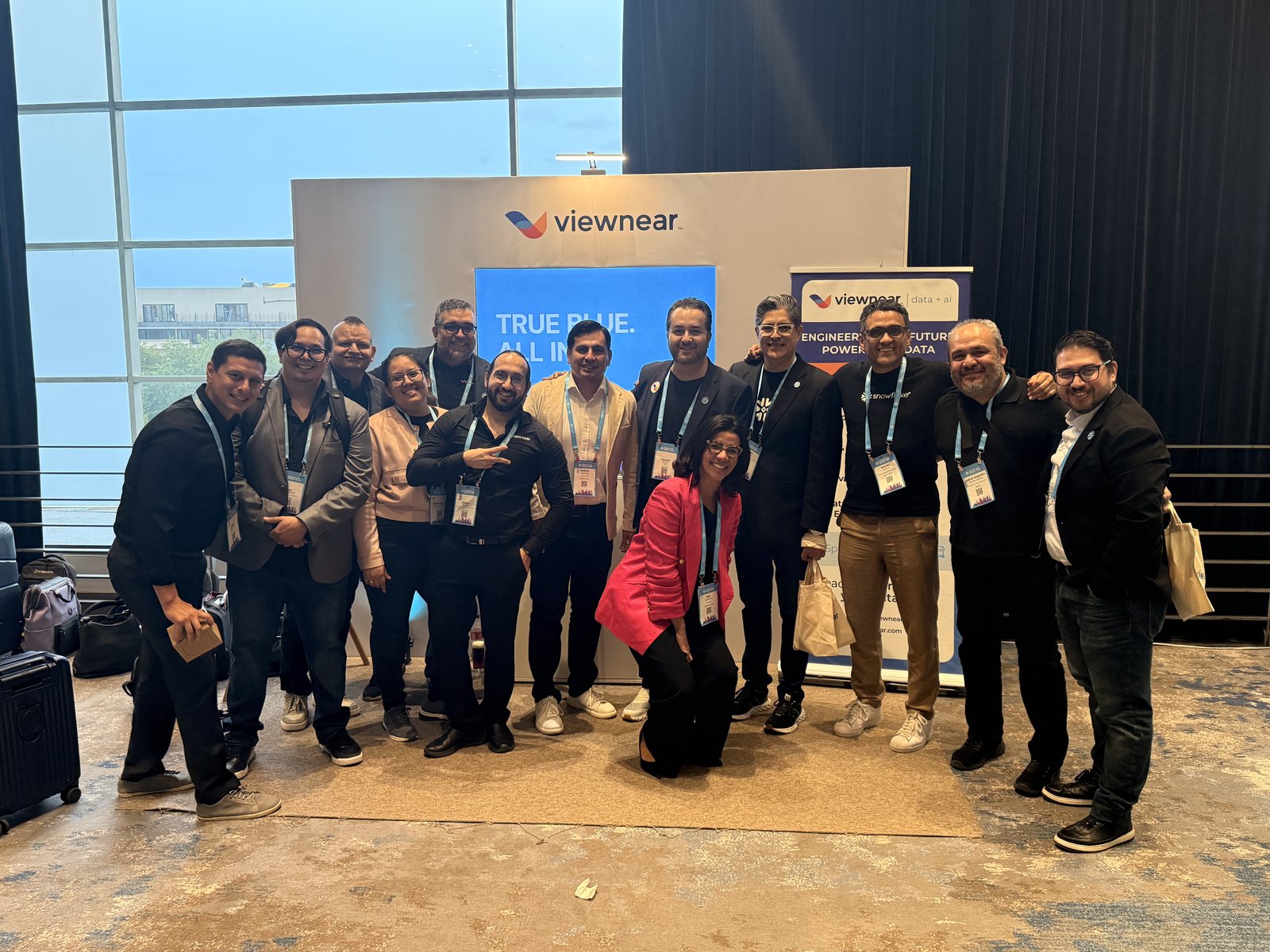
Honestly, the best part was not on the agenda.
Our Snowflake counterparts from Mexico and the United States were in the same room at the same time, and we finally met several people in person after months of working with them over email.
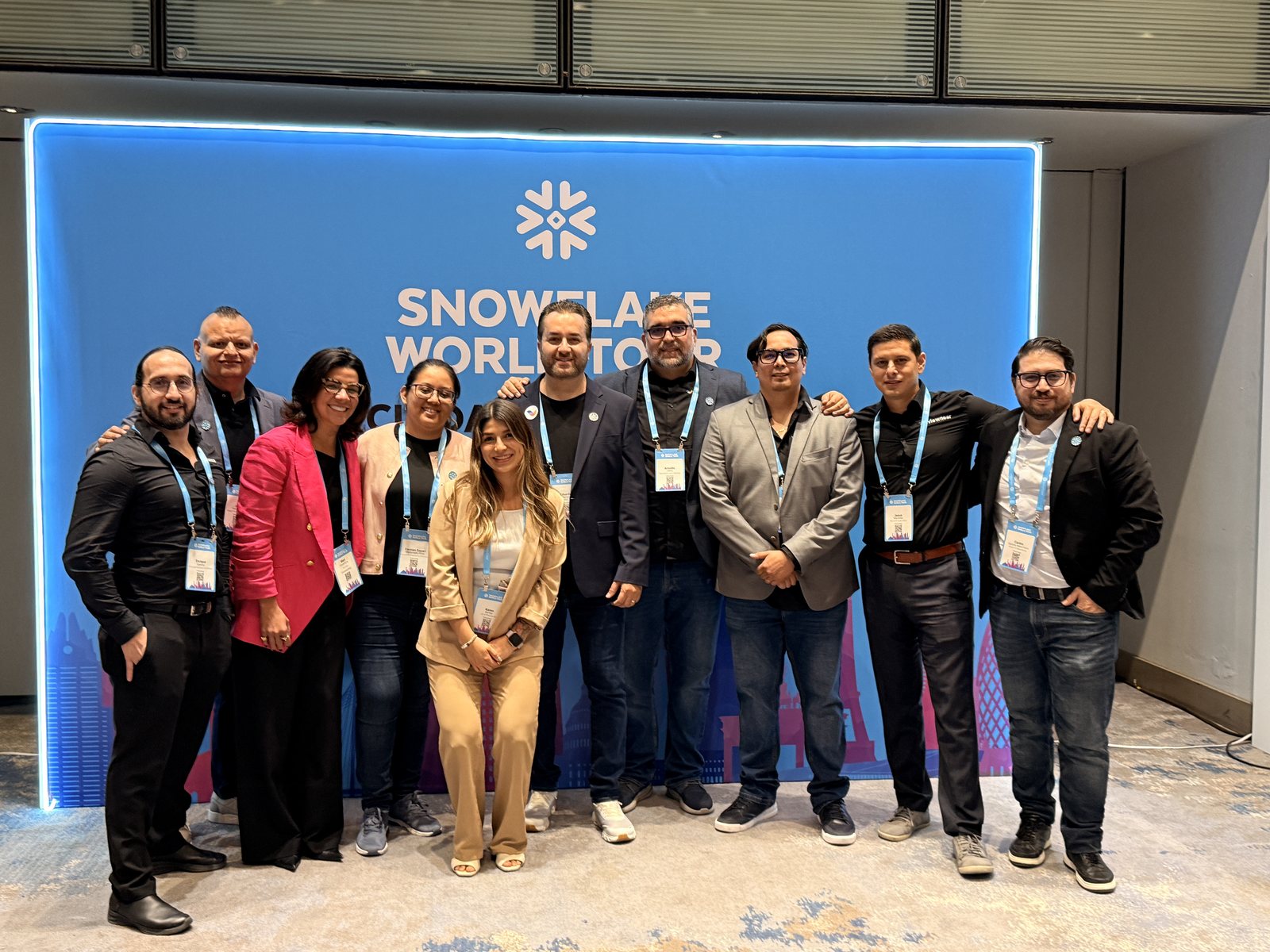
Viewnear is a Snowflake Premier and Select Services Partner and a CoCo Preferred Partner, and we do not build on anything else. True blue, as the screens kept saying all day.
In practice that is less a slogan than a decision about depth. One platform means the team knows its failure modes, the ones that only turn up in year two, and that one team stays accountable for the whole path, from the data landing in Snowflake to what finally acts on it, instead of a boundary between vendors to argue across.
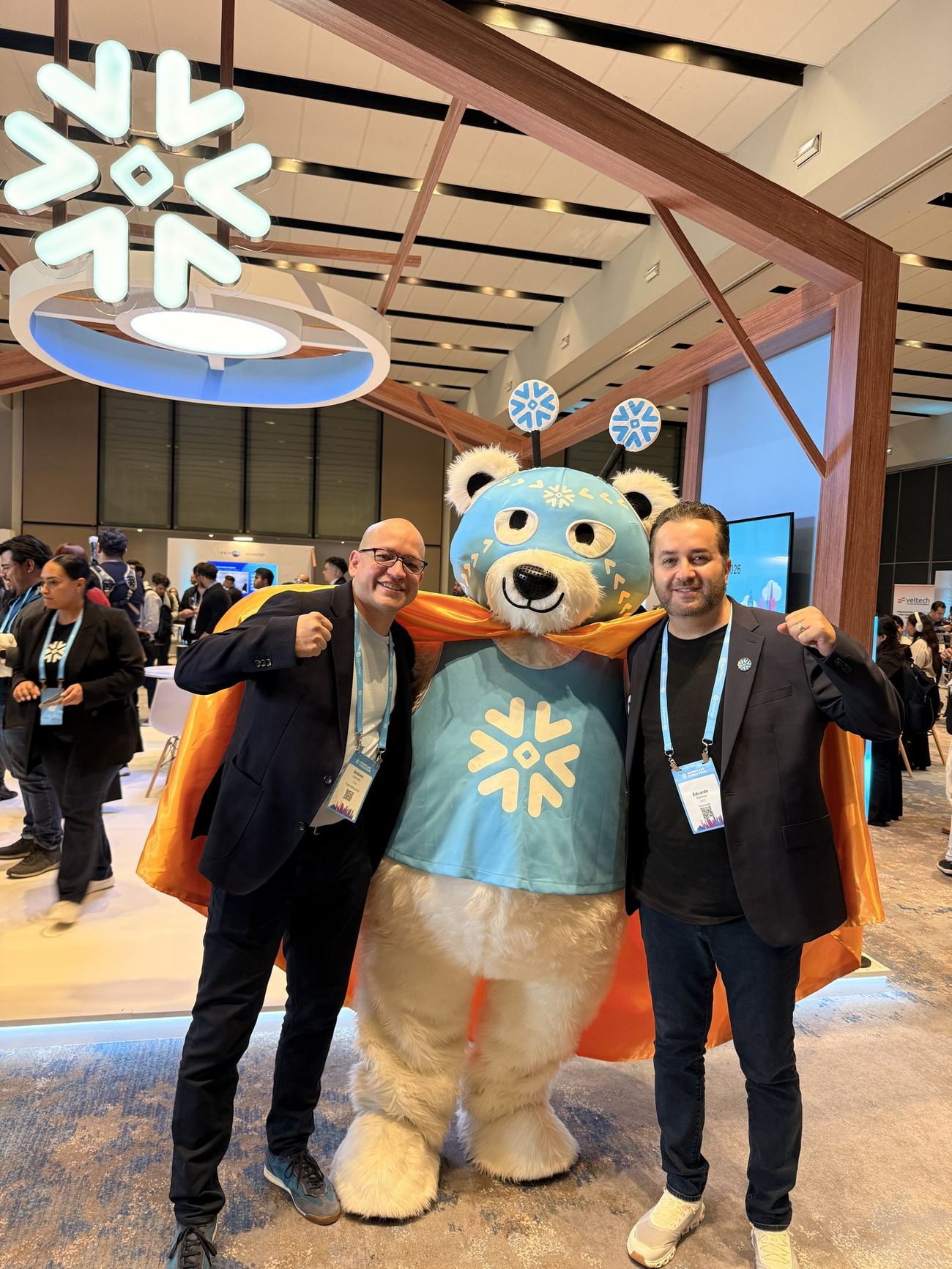
We made time for a photo with the bear.
Thank you to Snowflake for the day, for the partnership, and for the team that kept the whole thing running on time. Thank you to everyone who stopped at the booth and gave us a real document to run.
See you at the next one. If you have a process that hurts, bring it to us and we will tell you honestly whether it makes a good first one. The Snowflake partnership page has the detail on what our tiers mean in delivery, and you can start a conversation whenever the timing suits.